EARS Requirements: Writing Specs That AI Can Actually Follow
EARS (Easy Approach to Requirements Syntax) provides five simple patterns that turn vague, natural-language requirements into precise, testable specifications that AI and humans can reliably implement.
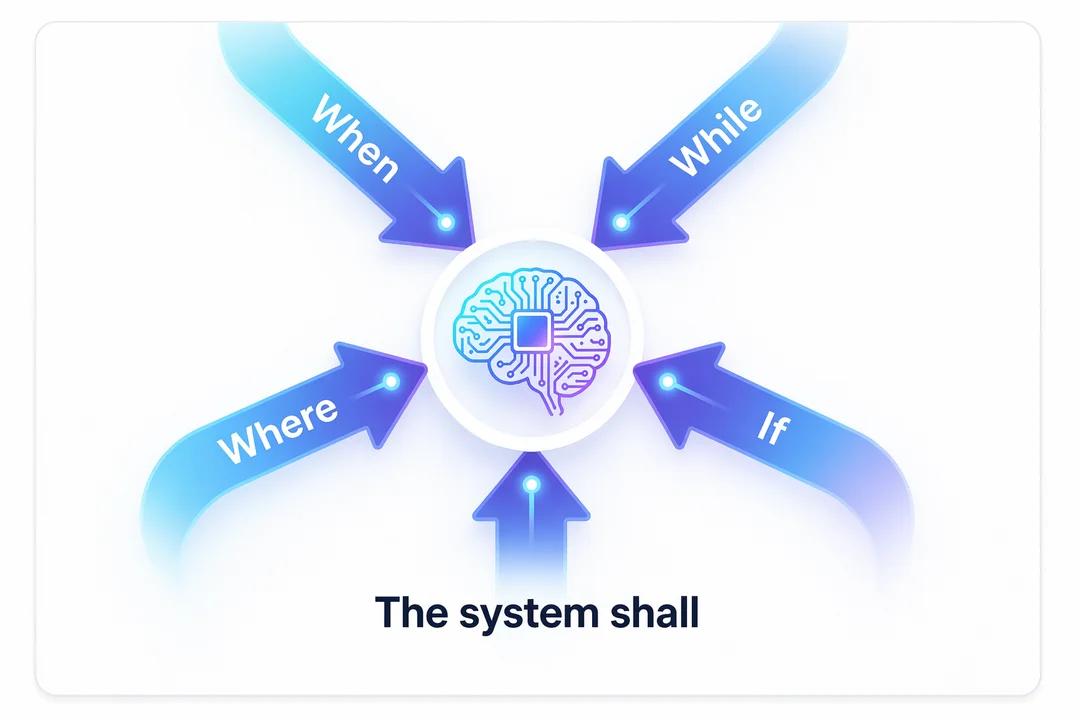
EARS Requirements: Writing Specs That AI Can Follow
Vague documentation is the enemy of modern software engineering. When project tickets rely on passive voice and ambiguous terms, both human developers and AI models struggle to deliver the correct output. Transitioning to a structured syntax bridges this communication gap perfectly.
What is the Easy Approach to Requirements Syntax?
The Easy Approach to Requirements Syntax (EARS) is a standardized template system used to write clear, unambiguous software requirements using conditional patterns like "When... Then...". By removing passive voice and jargon, EARS creates a universally understood language for both human engineers and AI models.
Why Teams are Adopting EARS
Removes Ambiguity: It forces product managers and engineers to state explicit triggers and systemic responses.
Enhances AI Code Generation: LLMs parse the structured logical flows much faster and with fewer errors than conversational paragraphs.
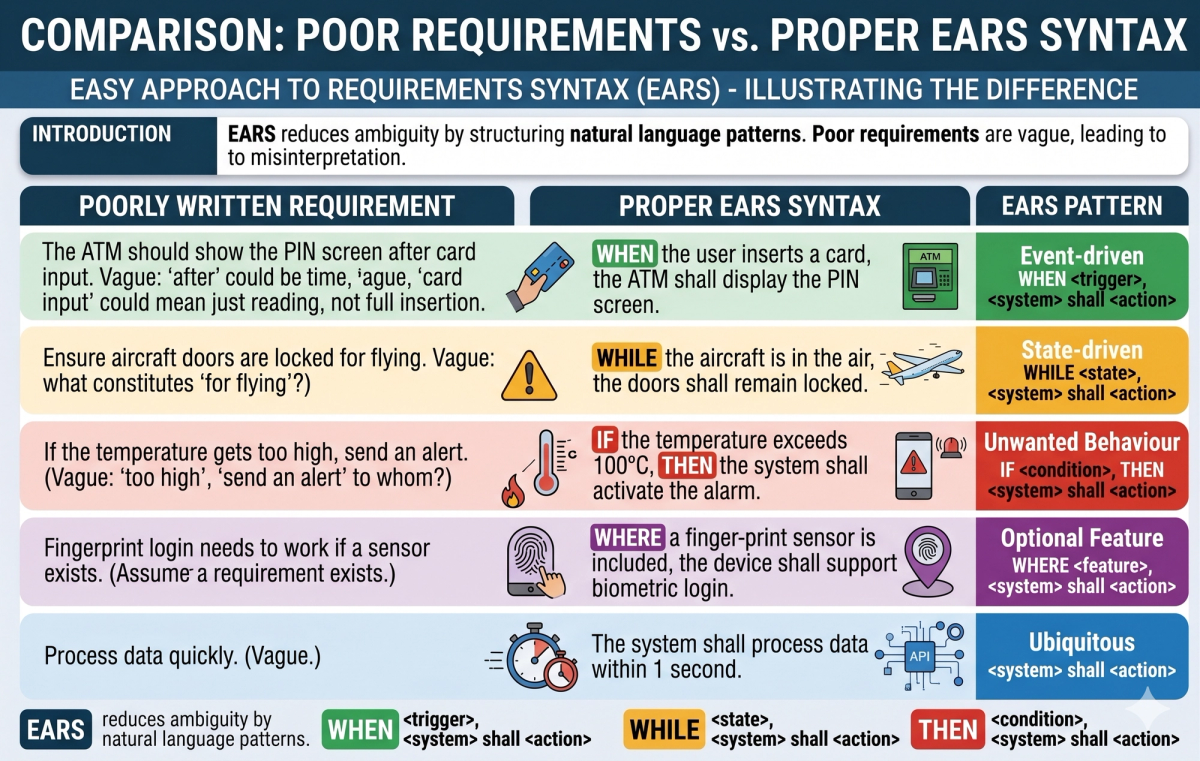
How do you write better software requirements?
You write better software requirements by adopting a strict syntactical framework that explicitly defines the system state, the trigger condition, and the expected system response. Moving away from narrative descriptions into exact rule-based statements prevents subjective interpretation during the development phase.
Core Elements of Strong Requirements
Ubiquitous Language: Use the same terminology across business stakeholders and the codebase.
Edge Case Definition: Explicitly define the unhappy paths alongside the main user journey.
Testability: If a requirement cannot be easily turned into a unit or integration test, it must be rewritten.
What goes into creating AI-ready specs?
Creating AI-ready specs involves formatting your documentation so that Large Language Models can easily extract variables, types, and architectural boundaries. This includes pairing EARS-based user stories with machine-readable payloads like JSON Schema or GraphQL definitions.
Expert Commentary: "An AI cannot read between the lines. Structuring your tickets using the EARS methodology transforms a messy backlog into an exact blueprint that a coding AI can execute flawlessly."
Transform your project requirements today.