Acceptance Criteria That Actually Work: The Spec's Secret Weapon
How to write observable, unambiguous, complete, and independent acceptance criteria that translate directly into automated tests and AI-executable contracts.
Acceptance Criteria That Actually Work: The Spec's Secret Weapon
If your feature technically “works” but still gets sent back during review, the issue usually isn’t the code—it’s the acceptance criteria.
In any strong software requirements specification (SRS), acceptance criteria are what connect product ideas to real implementation. They translate abstract requirements into concrete, testable outcomes. When written well, they remove ambiguity, accelerate development, and serve as the foundation for QA testing and AI-assisted development.
Why Acceptance Criteria Matter
Many teams treat acceptance criteria as a minor step in the product specification document. In reality, they are one of the most critical parts of the entire product development workflow.
Clear and well-structured acceptance criteria align product managers, developers, and QA from the very beginning. Instead of debating what “done” means during code review, teams already have a shared definition of success. This reduces back-and-forth, shortens feedback loops, and improves delivery speed.
In modern software development workflows, acceptance criteria also play a growing role in automation. They can be directly translated into test cases, used in behavior-driven development (BDD), and even leveraged by AI tools to generate code and validation scripts. This makes them not just a documentation tool, but a key driver of efficiency and consistency.
At their core, strong acceptance criteria turn vague product ideas into clear, executable instructions.
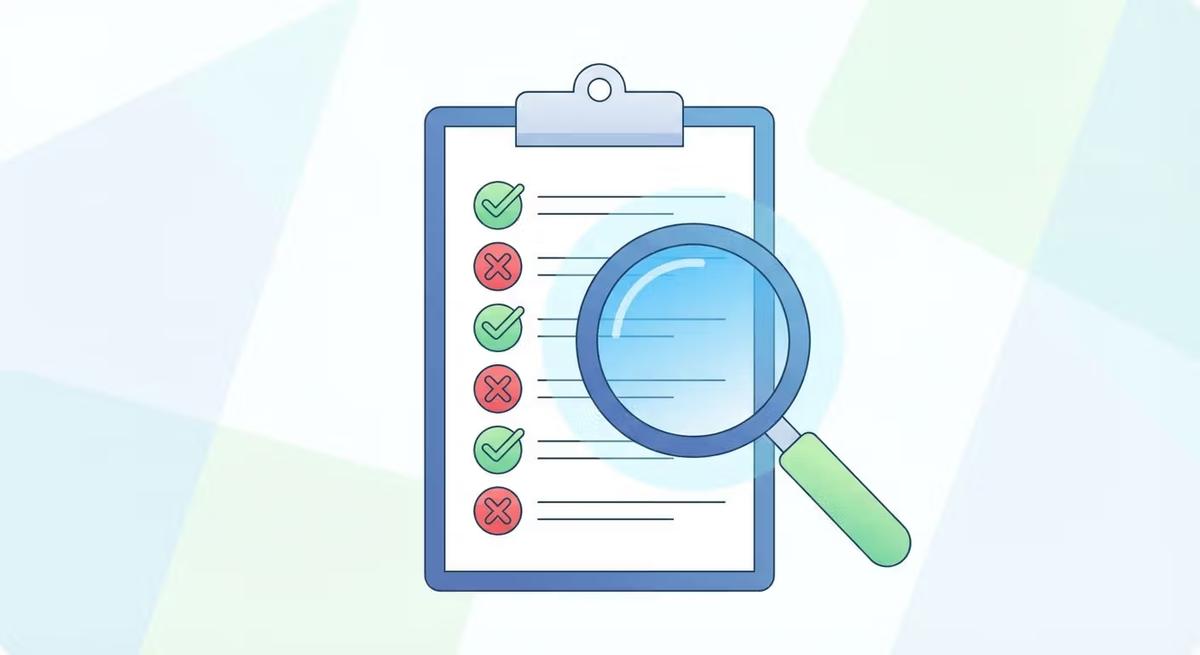
What Makes Good Acceptance Criteria?
High-quality acceptance criteria in a functional specification share four essential characteristics: they are observable, unambiguous, complete, and independent. These traits ensure that every requirement is understandable, testable, and actionable across teams.
First, acceptance criteria must be observable. If an outcome cannot be clearly seen or measured, it cannot be reliably tested. For example, instead of stating that a system should be “fast,” a stronger criterion would define a specific response time. This level of clarity ensures alignment between development and QA and improves the effectiveness of the requirements review process.
Second, they must be unambiguous. Each criterion should have only one clear meaning. Vague terms like “user-friendly” or “optimized” often lead to inconsistent interpretations, which in turn create bugs and rework. Precision in language is essential for maintaining a high-quality software spec template.
Third, acceptance criteria need to be complete. A well-written software requirements specification does not only cover ideal scenarios—it also accounts for edge cases and error conditions. Considering situations such as invalid inputs, API failures, or unexpected user behavior helps teams build more robust and reliable systems.
Finally, each criterion should be independent. It must be testable on its own without relying on other conditions. This makes implementation more straightforward for developers and validation more efficient for QA, especially in large-scale product development workflows.
A Simple Format That Works
You don’t need a complex structure to write effective acceptance criteria. In most agile development processes, a simple format like Given – When – Then is more than enough.
This format defines the context, the action, and the expected outcome in a clear and logical sequence. It improves readability, reduces ambiguity, and makes requirements easier to test. Because of its clarity, it is widely used in behavior-driven development (BDD) and integrates well with modern test automation frameworks.
More importantly, this structure is highly compatible with AI tools. When acceptance criteria follow a consistent format, AI can better interpret requirements and generate more accurate outputs, from code snippets to automated test cases.
From Spec to Code to Tests
Well-written acceptance criteria create a seamless connection between planning and execution. In a strong product development workflow, they act as the foundation for both development and testing.
QA teams can quickly convert acceptance criteria into structured test cases. Developers can use them as a reference point when building features, reducing guesswork and unnecessary iterations. At the same time, AI tools can leverage clearly defined criteria to generate code, suggest edge cases, and create test scripts with higher accuracy.
This creates a streamlined pipeline:
Spec → Acceptance Criteria → Code → Tests
When your software requirements specification (SRS) is clear at the acceptance criteria level, everything downstream becomes faster, more predictable, and easier to scale. It reduces friction between teams and ensures that what gets built matches what was intended.
Instead of starting from a blank page, you can use myspec —an AI-powered agent designed to guide you step-by-step and turn your ideas into a complete, high-quality spec ready for review and development.
👉 Try myspec to:
- Generate structured product requirement documents (PRDs)
- Define clear, testable acceptance criteria
- Catch edge cases early
- Create better specs for building websites and products with AI
Because better specs don’t just make development easier—they make great products possible.