A Better Way to Stay Updated, Build, Review, and Share with MySpec
Discover the latest MySpec release featuring Project Public Links for secure specification sharing, a brand-new Announcements Inbox, expanded AI model support including Claude Opus 5, Claude Sonnet 5, GPT-5.6, and Gemini, plus improvements that make software planning more collaborative than ever.
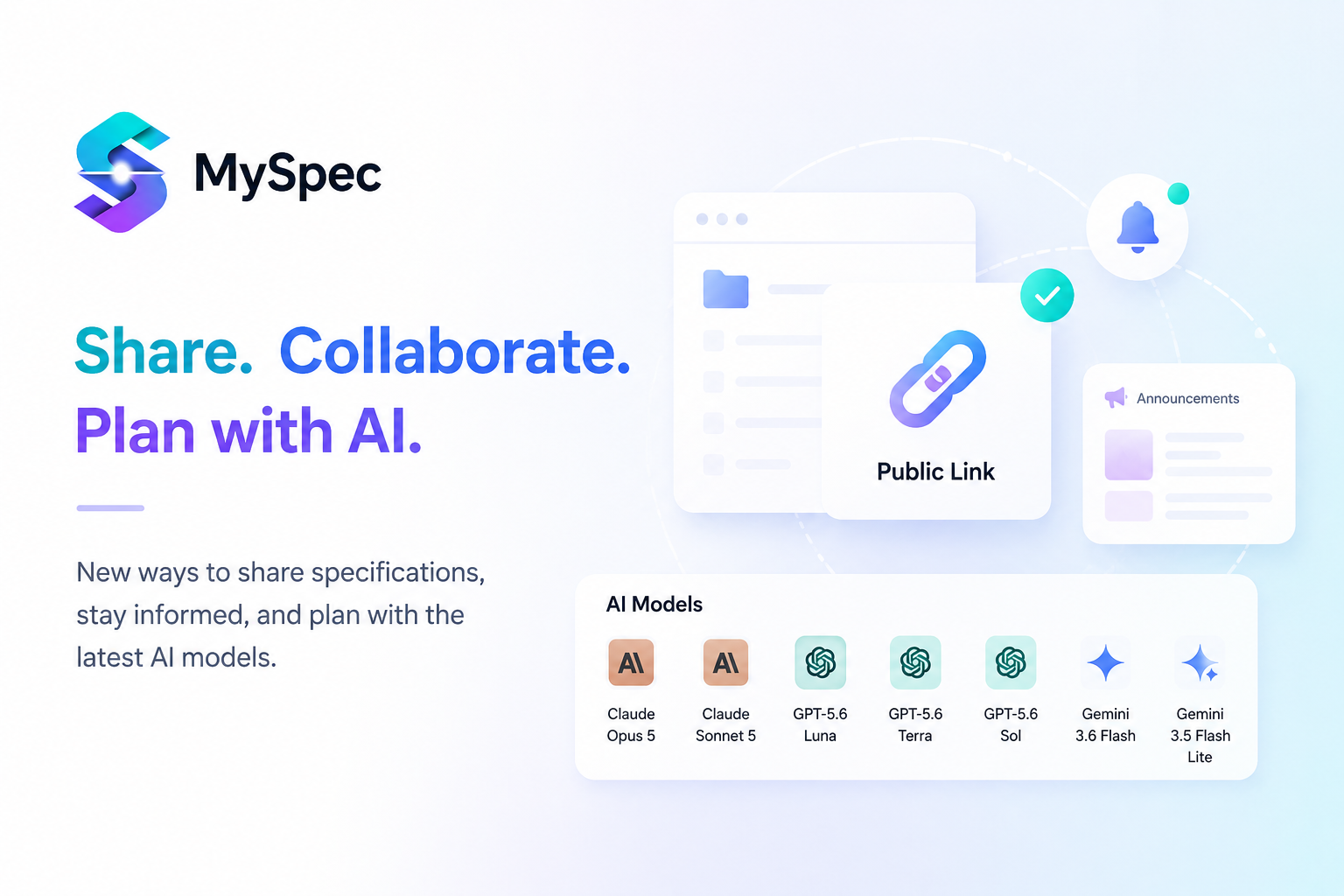
Every software project goes through the same journey, from planning and reviewing to sharing and implementation. As projects grow, keeping everyone aligned becomes just as important as generating the specifications themselves.
This release focuses on improving every stage of that workflow. We've introduced Announcement Inbox to keep you informed, expanded our AI model support to give you more flexibility, refined the review experience, and added Project Public Links so sharing specifications is as simple as sending a URL.
Let's take a closer look.
Project Public Links
Sharing specifications with clients, partners, reviewers, or other external stakeholders should not require adding them to your workspace or repeatedly exporting files after every revision. Project Public Links provide a straightforward way to share a complete, read-only view of a project with anyone, even if they do not have a MySpec account.
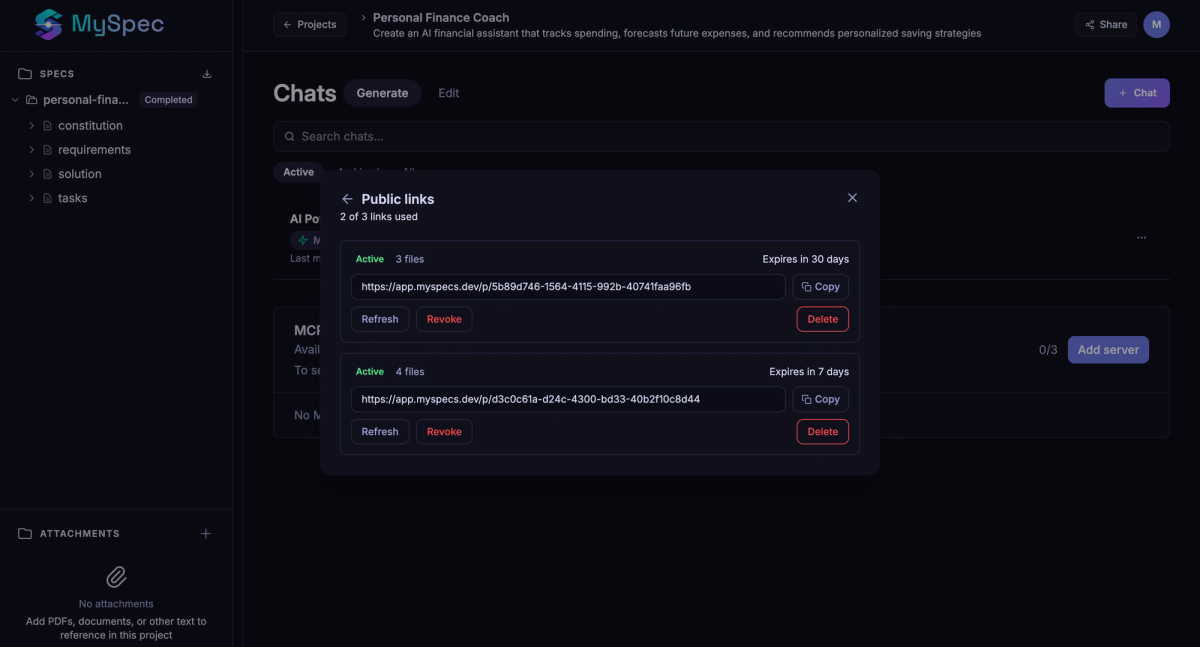
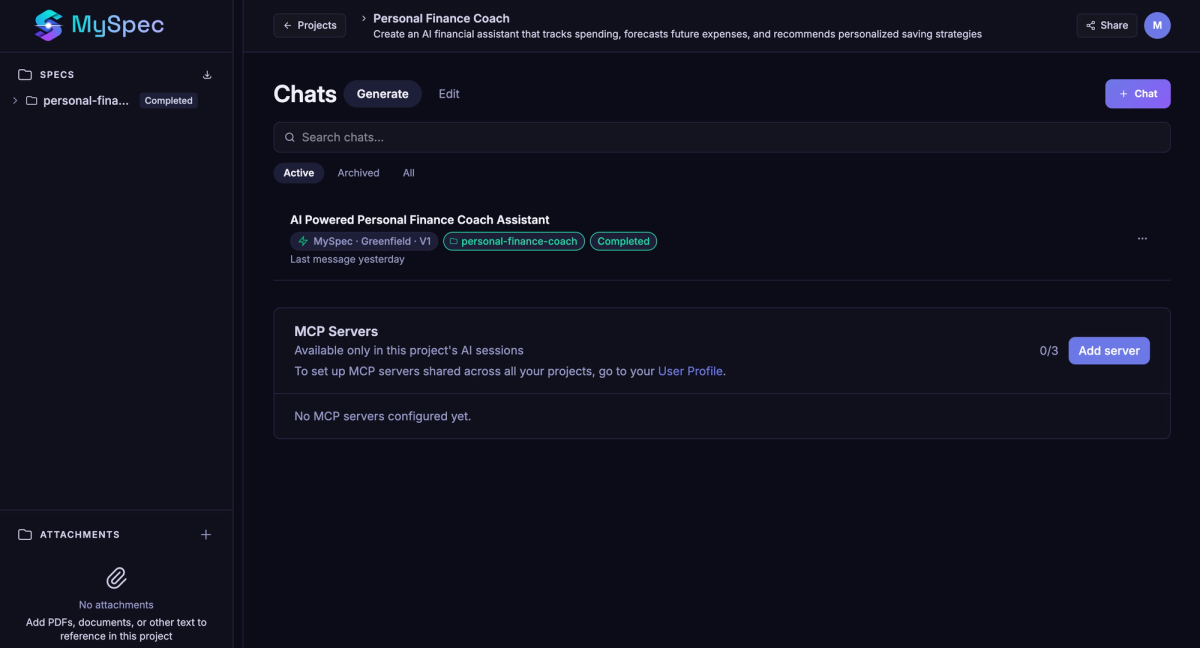
After completing a project, users are returned to the project's Chats page, where a Share button becomes available in the top-right corner. From there, project owners can open a Public Link, generate a new one, and copy the generated URL to share the project with clients, teammates, reviewers, or other stakeholders. When a public link is created, MySpec captures a frozen snapshot of the selected specification revisions. The shared content remains tied to that exact point in the project's history, so later edits inside the workspace do not change what recipients see. This makes Public Links ideal for formal reviews, client approvals, technical handoffs, progress demonstrations, and any situation where everyone needs to review the same approved version.
Each public link can be configured with an expiry period of between 1 and 30 days. Project owners can view and manage all existing links from the Public Links panel, revoke access immediately when a review is complete, or refresh a link to generate a new snapshot for sharing. Once a link expires or is revoked, the shared snapshot is no longer accessible, ensuring project owners retain full control over external access.
Recipients can open the link directly without signing in. The public page presents the snapshot through the same familiar file explorer and read-only revision viewer used within MySpec, making it easy to navigate the project structure and inspect individual specification files. Folders are expanded by default so visitors can immediately see the available content instead of opening each section manually.
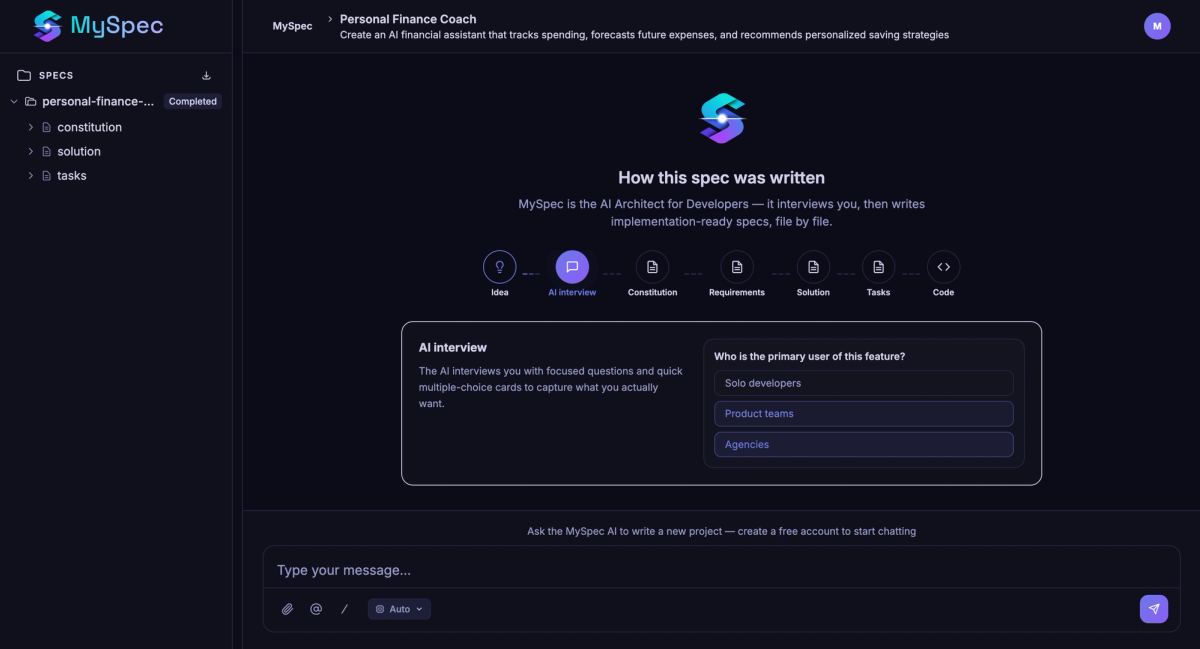
For recipients who need an offline copy, the entire snapshot can also be downloaded as a ZIP file. The download is assembled directly from the shared snapshot, allowing reviewers to retain the exact set of files associated with that public link without requiring authenticated access to the original workspace.
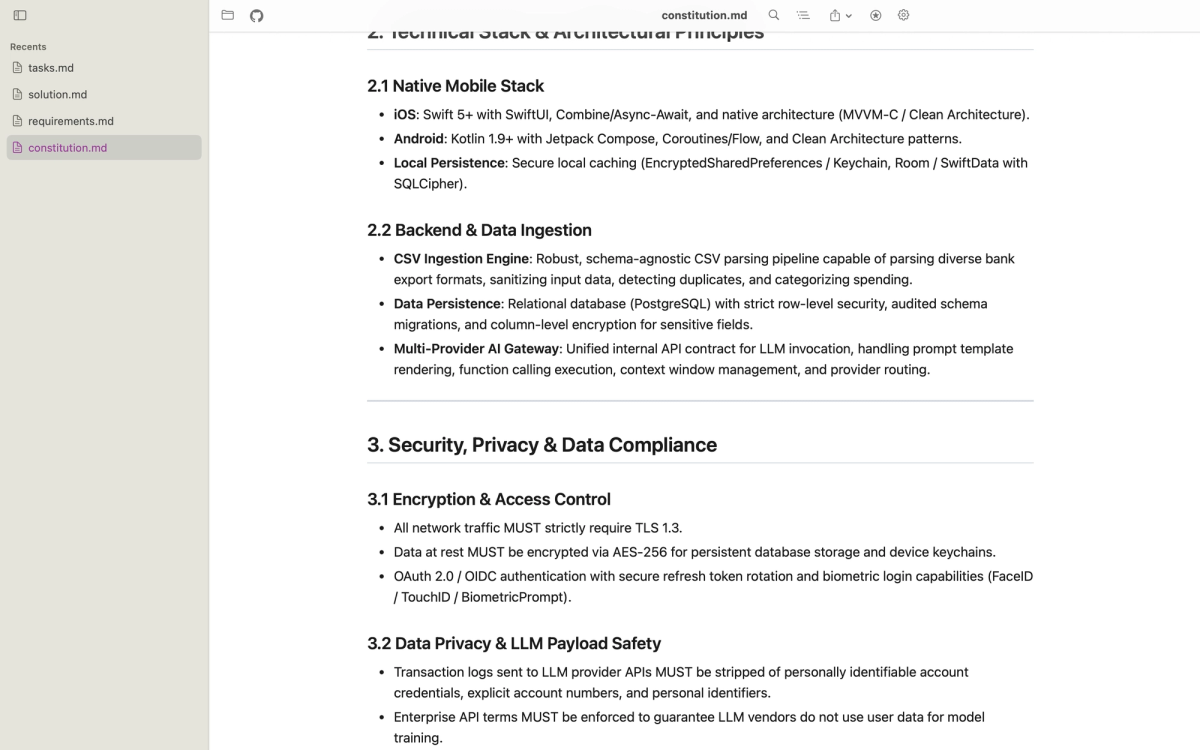
By combining immutable project snapshots with flexible link management, Project Public Links provide a simple and reliable way to distribute specifications beyond the development team. Whether you're requesting client feedback, handing work over to another team, or sharing project documentation with stakeholders, everyone reviews the same approved version without requiring access to your workspace.
More Models, More Flexibility
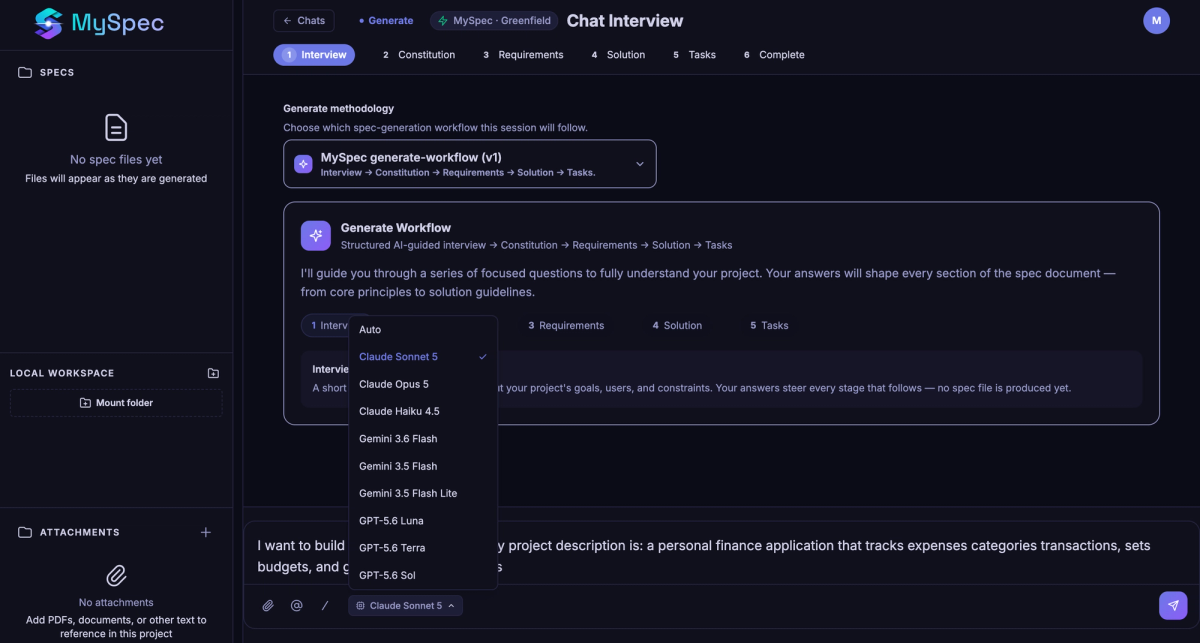
Choosing the right AI model can significantly influence the quality and efficiency of software planning. Whether you're creating a new product in Greenfield or analysing an existing codebase in Brownfield, different planning tasks benefit from different trade-offs between reasoning capability, context window, latency, and cost.
With this release, MySpec expands support for the latest models from Anthropic, OpenAI, and Google, giving you greater flexibility to choose the best model for every stage of your planning workflow. The following overview includes each model's context window, recommended use cases, and links to the official benchmark or technical documentation.
Claude Opus 5
Claude Opus 5 is Anthropic's flagship model for advanced reasoning and software engineering. Its ability to understand complex systems and maintain context over long conversations makes it a strong choice for planning large or technically demanding projects in MySpec.

Context Window
1M tokens
Enabling comprehensive analysis of large codebases, detailed specifications, and extensive technical documentation.
Recommended for MySpec Workflows
- Greenfield: Designing complex system architectures and generating comprehensive Solution specifications.
- Brownfield: Analysing large existing codebases and producing accurate Proposal and Requirements documents.
- Projects involving multiple services, large repositories, or long technical specifications.
- Tasks that require deep reasoning, architectural decisions, and consistent long-context understanding.
Official Benchmark
Claude Sonnet 5
Claude Sonnet 5 is Anthropic's high-performance model, designed to deliver an optimal balance between reasoning capability, speed, and cost. It excels at software engineering, code understanding, and structured problem-solving, making it an excellent choice for a wide range of planning workflows in MySpec.

Context Window
1M tokens
Enabling the model to process extensive specifications, technical documentation, and large codebases while maintaining strong long-context understanding.
Recommended For
- Most Greenfield and Brownfield workflows
- Requirements and Solution generation
- Medium to large software projects
- Teams looking for a balance between reasoning quality, speed, and performance
Official Benchmarks
Gemini 3.6 Flash and Gemini 3.5 Flash-lite
Gemini is Google's family of multimodal AI models, designed to deliver efficient reasoning, low latency, and reliable performance for production AI applications. In MySpec, Gemini is available in two variants, Gemini 3.6 Flash and Gemini 3.5 Flash-Lite, allowing teams to choose the right balance between capability, speed, and cost for different planning workflows.
Context Window
1M tokens
Enabling the analysis of extensive specifications, technical documentation, and large software projects while maintaining long-context understanding.
Gemini 3.6 Flash
Recommended For
- Most Greenfield and Brownfield workflows
- Requirements and Solution generation
- Coding, knowledge-intensive, and multimodal planning tasks
- Teams looking for the best balance between reasoning quality, speed, and cost
Gemini 3.5 Flash-Lite
Recommended For
- MVP and prototype planning
- Quick Requirements and Proposal generation
- High-volume planning workflows
- Rapid project iteration where low latency and cost efficiency are priorities
Official Benchmarks
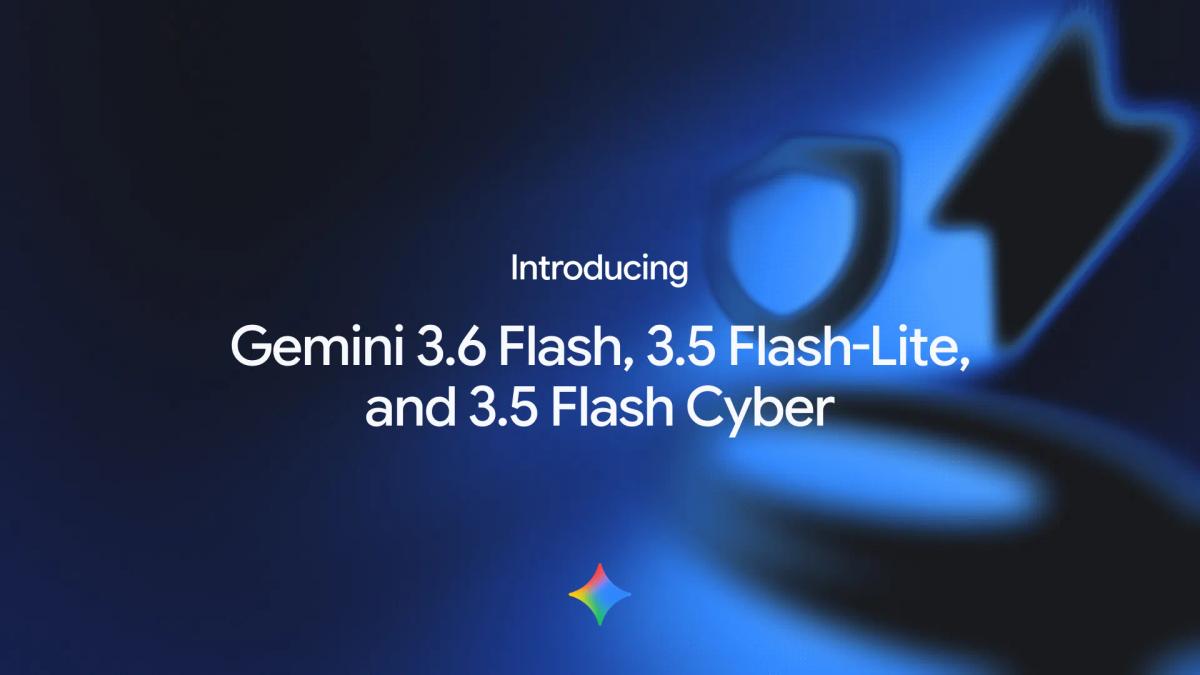
- Introducing Gemini 3.6 Flash, 3.5 Flash-Lite, and 3.5 Flash Cyber
- Gemini 3.6 Flash by Google
- Gemini 3.5 Flash Lite by Google
GPT-5.6
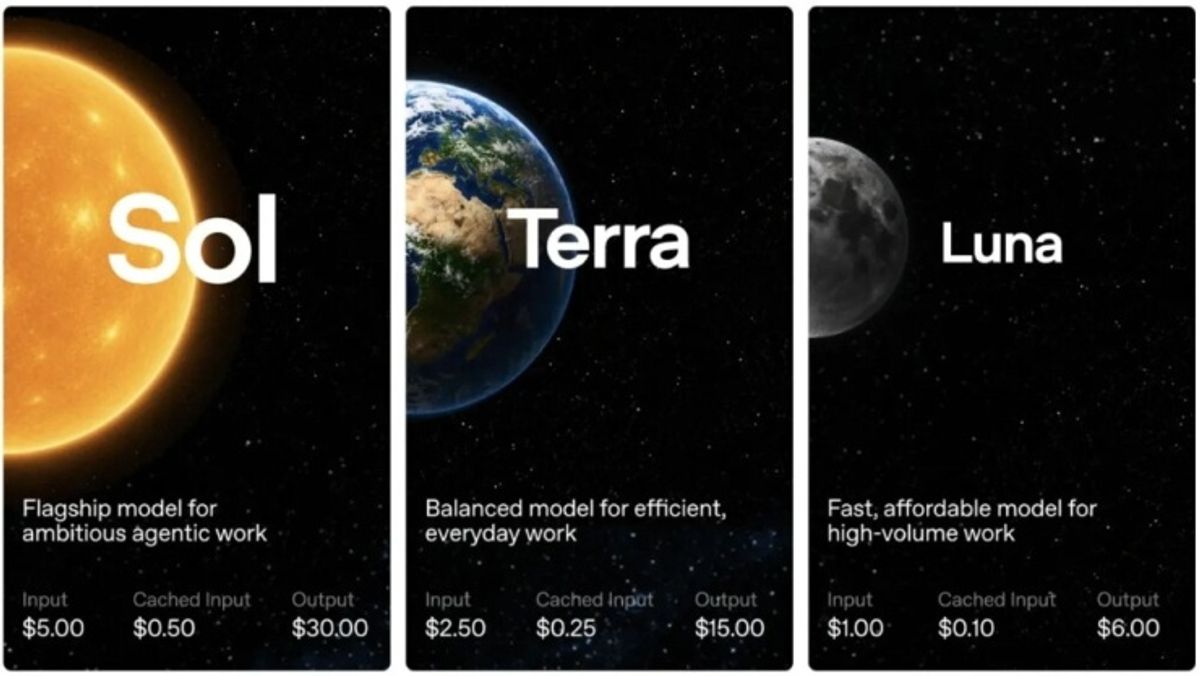
GPT-5.6 is OpenAI's latest flagship model family, delivering significant improvements in reasoning, coding, and instruction following. In MySpec, GPT-5.6 is available in three variants, Luna, Terra, and Sol, allowing teams to choose the right balance between reasoning capability, speed, and efficiency for different planning workflows.
Context Window
400K token
Enabling comprehensive analysis of large specifications, technical documentation, and complex software projects while maintaining long-context understanding.
Available Variants
GPT-5.6 Luna
Recommended For
- Complex Greenfield architecture and solution design
- Large Brownfield codebase analysis
- Enterprise-scale planning
- Projects requiring the highest level of reasoning and accuracy
GPT-5.6 Terra
Recommended For
- Most Greenfield and Brownfield workflows
- Requirements and Solution generation
- Medium to large software projects
- Teams looking for the best balance between quality, speed, and cost
GPT-5.6 Sol
Recommended For
- MVP and prototype planning
- Quick Requirements and Proposal generation
- Rapid project iteration
- Small to medium-sized software projects where fast responses are preferred
Official Benchmarks
Stay informed with the new Announcements Inbox
Every MySpec release introduces new capabilities, but keeping track of what's changed shouldn't require checking our blog or social media.
That's why we've introduced the Announcements Inbox, a dedicated place inside MySpec where you'll find the latest product updates as soon as they're available.
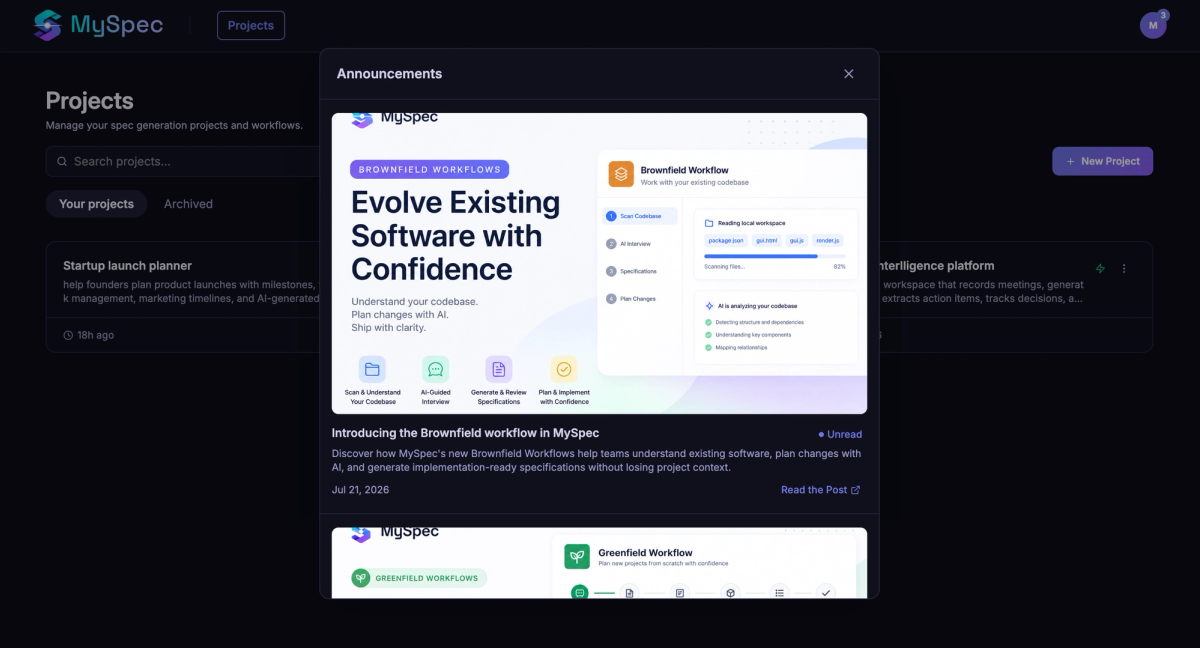
Unread announcements are highlighted directly from your profile avatar, allowing you to quickly see what's new whenever you return to the platform. Each announcement includes a clean reading experience with rich banners and full localisation support across English, Japanese, and Chinese.
Rather than interrupting your workflow, the inbox keeps you informed at exactly the right moment, when you're already inside MySpec and ready to start planning your next project.
Looking Ahead
This release brings together four important improvements across the MySpec experience. The new Announcement Inbox keeps every user informed about product updates without leaving the application, expanded AI model support provides greater flexibility when generating specifications, Project Public Links make it easier to collaborate with stakeholders outside your workspace, and the enhanced review experience streamlines how teams inspect and approve specifications before moving forward.
Together, these improvements make the entire specification workflow more connected, from staying informed about new capabilities, to creating higher-quality specifications, reviewing changes efficiently, and sharing approved work with confidence. Every feature is designed to reduce friction throughout the planning process while helping teams maintain a single, reliable source of truth.
We're grateful to everyone who continues to build with MySpec and share feedback with us. Your ideas continue to shape the platform, and we're excited to keep making specification-driven development simpler, more collaborative, and more effective with every release.