Understanding SQL: From Basic Queries to Real-World Database Challenges
SQL is more than writing queries. Explore how relational databases work, the challenges of query performance, transactions, concurrency, and data integrity, and why clear specifications matter when building reliable applications with developers and AI coding agents.
Understanding SQL: From Basic Queries to Real-World Database Challenges
SQL is one of the most widely used technologies in software development, powering everything from simple applications to complex enterprise systems. Whether you're building an e-commerce platform, managing customer information, or developing an AI-powered application, chances are you'll need a reliable way to store, retrieve, and manage data.
At first, SQL seems relatively straightforward. You write a query, the database returns the requested information, and your application uses the result. But as projects grow, developers encounter challenges that go far beyond basic queries. Database performance, data consistency, concurrent operations, and security all become important considerations.
Understanding SQL therefore means more than learning its syntax. It means understanding how databases support application behavior, why seemingly correct queries can create unexpected problems, and how better planning can help developers build more reliable systems.
In this article, we'll explore SQL from its fundamentals to the challenges of real-world database development, including how clear requirements and Spec-Driven Development can help bridge the gap between writing queries and building dependable software.
1. What Is SQL?
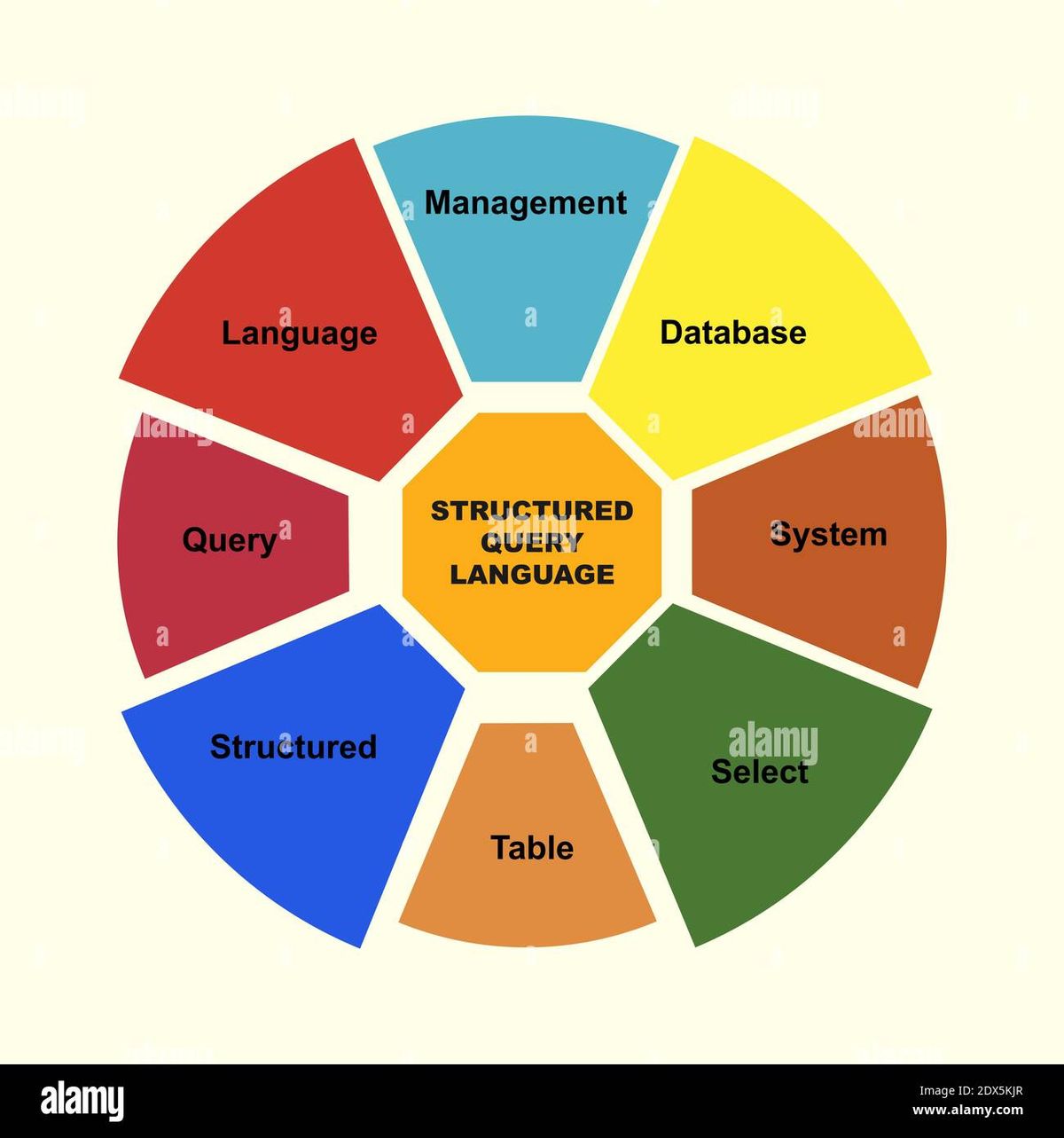
SQL stands for Structured Query Language. It is a standardized language used to interact with relational databases, allowing users and applications to create, retrieve, modify, and manage structured data. SQL was developed in the 1970s and has since become a fundamental technology in database management.
To understand how SQL works, it helps to first understand relational databases. A relational database organizes information into tables consisting of rows and columns. Each row represents a record, while each column describes a particular attribute of that record. Relationships between tables allow related information to be connected through identifiers and constraints.
Imagine an online shopping application. The system needs to store customer information, product details, and purchase history. Instead of keeping everything in one large collection of data, a relational database can organize this information into separate tables such as customers, products, and orders.
For example, a customers table might look like this:
customer_id customer_name email
101 Alice alice@example.com
102 Bob bob@example.com
103 Charlie charlie@example.com
An orders table could then reference customers through their unique identifiers, allowing the application to associate each purchase with the correct customer.
SQL provides the language for interacting with these tables. When a customer opens their order history, the application can use SQL totrieve the relevant records. When they place a new order, SQL can be used to store the purchase information.
SQL vs. Database Management Systems
One common misconception is that SQL and database systems such as MySQL or PostgreSQL are the same thing. In reality, SQL is the language, while PostgreSQL, MySQL, Microsoft SQL Server, and Oracle Database are database management systems that support SQL.
Although these systems share standardized SQL concepts, they also have different features, extensions, and implementation details. A query that works in PostgreSQL may require adjustments when used with another database system.
Another important characteristic of SQL is that it is primarily a declarative language. Instead of describing every step required to retrieve information, developers specify what data they want. The database management system then determines how to execute the request.
This distinction becomes particularly important when working with larger datasets, where different execution strategies can produce the same result with significantly different performance characteristics.
2. How Does SQL Work? Understanding the Basic Commands
Most developers begin learning SQL through a few fundamental commands. These operations provide the foundation for working with relational data and are commonly associated with CRUD: Create, Read, Update, and Delete.
The examples below use PostgreSQL-compatible SQL syntax and the customer table introduced earlier.
Retrieving Data with SELECT
The SELECT statement retrieves information from one or more tables. For example, suppose we want to find the name and email address of a particular customer.
SELECT customer_name, email FROM customers WHERE customer_id = 101;
The database returns the matching customer's information. The WHERE clause filters the results so that only records satisfying the specified condition are included.
Without an appropriate filter, the query may return more information than the application needs. This becomes increasingly important when tables contain thousands or millions of records.
Adding Data with INSERT
When a new customer registers, the application needs to create a record.
INSERT INTO customers (customer_id, customer_name, email) VALUES (104, 'David', 'david@example.com');
The INSERT statement adds a row to the table, provided that the values satisfy the table's constraints.
Updating Data with UPDATE
If a customer changes their email address, the application can modify the existing record.
UPDATE customers SET email = 'alice.new@example.com' WHERE customer_id = 101;
The WHERE clause is especially important here. Without it, the statement could update every row in the table.
Removing Data with DELETE
SQL also supports deleting records.
DELETE FROM customers WHERE customer_id = 104;
This removes the matching record if the operation is permitted by the database's constraints and permissions.
These examples demonstrate how SQL enables applications to interact with stored information. However, SQL extends beyond these four commands. It also supports defining database structures, enforcing constraints, controlling transactions, managing access privileges, and combining information across multiple tables.
Connecting Data with JOIN
Relational databases become particularly useful when applications need information from multiple related tables.
For example, an order history page might need to display both order information and the customer's name.
SELECT o.order_id, c.customer_name, o.total_amount FROM orders AS o JOIN customers AS c ON o.customer_id = c.customer_id;
The JOIN operation connects matching records using their shared relationship.
This is one of SQL's most useful capabilities, but it also introduces additional considerations. As the number of tables, relationships, and records increases, developers must understand how these operations affect correctness and performance.
3. Why Writing Correct SQL Is Only the Beginning
Consider a developer building an order management application. The initial requirement seems simple: customers should be able to view their purchase history.
A query might retrieve all orders associated with a particular customer:
SELECT order_id, status, total_amount FROM orders WHERE customer_id = 1024;
Technically, the query may work exactly as written. But does that mean the feature is complete?
Not necessarily.
Customers may expect their newest orders to appear first. The application may need pagination when a customer has hundreds of purchases. Cancelled orders might need to remain visible for recordkeeping, while sensitive order information must only be accessible to authorized users.
These requirements affect how the database is queried and how the application handles the results.
For example, retrieving recent orders with a predictable ordering could look like this:
SELECT order_id, status, total_amount FROM orders WHERE customer_id = 1024 ORDER BY created_at DESC, order_id DESC LIMIT 20;
Assuming order_id is unique, the additional ordering column makes the result deterministic when multiple orders share the same creation timestamp.
However, this still does not fully solve pagination. If new records are inserted between page requests, offset-based pagination can produce duplicates or skipped records. Applications with frequently changing datasets may need to consider alternatives such as keyset pagination.
The deeper issue is that SQL can implement a defined operation, but it cannot independently determine whether that operation represents the intended product behavior.
This distinction is particularly important when requirements are incomplete or developers must make assumptions during implementation.
4. SQL Performance: Why a Working Query Can Become a Problem
A query that performs well during development may behave differently in production.
Imagine an application with only a few hundred orders. Retrieving a customer's purchase history might take very little time. As the platform grows to millions of orders and serves many concurrent users, the same query may require more resources or become slower.
The challenge is not necessarily that the SQL statement is incorrect. Instead, the database must process a larger workload under different conditions.
Understanding Query Execution Plans
When a database receives a SQL query, its query optimizer evaluates possible execution strategies. Depending on the query structure, available indexes, and database statistics, the system may choose different ways to access and process the data.
For example, PostgreSQL provides the EXPLAIN command to inspect a query's planned execution strategy.
EXPLAIN SELECT order_id, total_amount FROM orders WHERE customer_id = 1024;
The resulting execution plan describes how PostgreSQL expects to process the query. It may include operations such as sequential scans, index scans, joins, and sorting.
Developers can also use EXPLAIN ANALYZE to execute the query and examine actual execution statistics.
EXPLAIN ANALYZE SELECT order_id, total_amount FROM orders WHERE customer_id = 1024;
An important distinction is that estimated execution costs are not measurements of elapsed time. They are values used by the optimizer to compare possible execution strategies. EXPLAIN ANALYZE provides actual execution information, but its measurements also have limitations, including profiling overhead and the exclusion of some client-side costs.
Understanding these tools helps developers move beyond guessing which query might be faster and begin investigating how the database actually processes their requests.
Why Indexes Matter
An index is an additional database structure that can help locate relevant records more efficiently.
For example, if an application frequently retrieves orders using customer_id, an index might improve the performance of those lookups.
CREATE INDEX idx_orders_customer_id ON orders (customer_id);
With this index available, the query optimizer can consider using it when searching for matching customer orders.
However, creating more indexes does not automatically mean better performance. Indexes require storage and additional maintenance when indexed data changes. An index that benefits frequent searches may also increase the cost of certain write operations.
Furthermore, database optimizers do not necessarily use an index simply because one exists. If a query returns a large proportion of the table, scanning the table may be more efficient.
The important insight is that SQL performance depends on workload characteristics, not just query syntax.
A well-designed database should reflect how the application actually uses its data, including expected data volumes, common access patterns, and acceptable response times.
5. The Hidden Complexity of Transactions and Concurrency
Performance is only one part of database reliability. Another important challenge appears when multiple operations happen at the same time.
Imagine an online store with only one item remaining in stock. Two customers attempt to purchase that item simultaneously.
If both requests read the inventory before either completes its update, they may both conclude that the product is available. Without appropriate concurrency controls, the application could accept more purchases than the available stock supports.
Each individual SQL statement might be valid, yet the combined outcome could violate the application's business rules.
How Transactions Help Maintain Consistency
A transaction groups database operations into a unit of work. Transactions are commonly explained through the ACID properties: Atomicity, Consistency, Isolation, and Durability.
Atomicity means that a transaction's changes are committed together or rolled back if the transaction fails. Consistency means that committed transactions preserve the database's enforced integrity rules. Isolation concerns how concurrent transactions interact, while durability means committed changes survive failures within the database's durability guarantees.
These properties are essential for applications involving financial transactions, inventory management, reservations, and other operations where data consistency matters.
However, transactions do not automatically prevent every concurrency problem. Database systems provide different isolation levels, and each level offers particular guarantees about what concurrent operations can observe.
For example, PostgreSQL uses Read Committed as its default transaction isolation level. Under this level, two successive queries within the same transaction can observe different committed data if another transaction makes changes between them.
Handling Concurrent Inventory Updates
For a simple inventory counter, PostgreSQL can use a conditional update to prevent stock from becoming negative:
UPDATE inventory SET available_stock = available_stock - 1 WHERE product_id = 501 AND available_stock > 0 RETURNING available_stock;
This statement updates the inventory only when stock is available. If no row is returned, the application can treat the reservation attempt as unsuccessful.
A complete purchase workflow still needs to coordinate inventory changes with related operations such as creating an order and processing payment. External payment systems introduce additional concerns because their actions are not automatically part of a database transaction.
This example demonstrates why concurrency is not merely an advanced database topic. It is a product behavior that must be considered when defining how a system should work.
6. Database Design Is Also About Business Rules
A database schema is often described as a collection of tables, columns, and relationships. In practice, designing a database also means deciding which rules the system must preserve.
Consider an order management application. Should customers be allowed to delete completed orders? Can an order exist without a customer? Should the system permit negative order totals? What happens to historical purchases when a customer account is removed?
These decisions influence database design, application logic, and data retention policies.
Relational databases support constraints that help enforce certain rules directly.
For example:
CREATE TABLE orders ( order_id BIGINT PRIMARY KEY, customer_id BIGINT NOT NULL REFERENCES customers(customer_id), total_amount NUMERIC(12, 2) NOT NULL CHECK (total_amount >= 0) );
This table definition establishes several basic requirements. Every order must have a unique identifier, reference an existing customer, and contain a nonnegative total amount.
The database can reject operations that violate these constraints, providing an additional layer of protection against invalid data.
However, constraints cannot independently express every business requirement. Rules involving user permissions, approval processes, payment workflows, or retention periods may also require application logic and operational controls.
A technically valid database design can therefore still be unsuitable for a particular product if it is based on incorrect assumptions.
Good database design begins with understanding the business rules, not simply choosing the right tables and data types.
7. SQL in the Age of AI Coding Agents
AI coding tools have changed how developers approach many implementation tasks. Developers can now describe a feature in natural language and ask an AI agent to generate database schemas, SQL queries, and application code.
For straightforward tasks, this can significantly reduce repetitive work. However, generating syntactically correct SQL does not guarantee that the resulting application satisfies its requirements.
Consider the instruction:
"Build an order management system with a database."
An AI coding agent might generate tables for customers, products, and orders, along with the necessary queries for creating and retrieving records.
But this instruction leaves many questions unanswered. How should inventory reservations work? What happens when a payment fails? Which users are authorized to access particular orders? How should the system handle concurrent purchases? What level of performance is expected as the dataset grows?
Without this information, the agent must make assumptions or request clarification.
Some assumptions may be reasonable, while others can introduce significant problems that only become visible during testing or production use.
For example, an AI-generated query might delete cancelled orders because the prompt says users should be able to remove orders. But if the business requires historical records for auditing or reporting, the implementation would violate an important requirement even though the SQL executes successfully.
The underlying problem is not necessarily the quality of the generated code. It is the absence of clearly defined context.
This leads to an important distinction: AI can accelerate the implementation of database operations, but developers still need to define what correct implementation means.
Code review, automated testing, database constraints, and performance measurements remain necessary, especially when generated code interacts with sensitive or business-critical data.
8. Where Spec-Driven Development Fits In
The challenges discussed throughout this article share a common theme. Many database problems begin before the first SQL statement is written, when important requirements and constraints remain undefined.
This is where Spec-Driven Development becomes relevant.
Instead of moving directly from a product idea to implementation, Spec-Driven Development emphasizes defining the expected system behavior, technical constraints, and implementation requirements before writing code.
For a database-driven application, this means thinking beyond the tables and queries themselves.
A specification for an order management system might define who can access order information, how inventory must behave during concurrent purchases, which records must be retained, and what performance targets the application should satisfy.
For example, a performance requirement could state that the order search API must achieve a p95 response time below 300 milliseconds under a defined workload of 100 concurrent users and a database containing one million orders.
This is an illustrative requirement rather than a universal benchmark. The actual target should reflect the application's needs and infrastructure. It is also important to distinguish API response time from SQL execution time, since the API includes processing outside the database.
By defining measurable expectations, teams establish a clearer basis for implementation and testing.
Connecting SQL Development with MySpec
MySpec helps teams turn product ideas and requirements into structured specifications that developers and AI coding agents can use during implementation.
For database-driven applications, this approach can help teams clarify functional requirements, technical design decisions, and implementation tasks before development begins.
Rather than simply asking an AI coding agent to generate a database, developers can work from specifications that describe the intended data relationships, business rules, performance expectations, and acceptance criteria.
This creates a more consistent reference for implementation and review, particularly when multiple developers or AI tools contribute to the same project.
MySpec does not replace SQL optimization tools, database transaction management, or performance testing. Instead, it addresses an earlier part of the development process: helping teams establish what the system is expected to achieve and providing structured context for the work that follows.
The value is not limited to writing better SQL. It extends to reducing ambiguity between product requirements, database design, implementation, and verification.
9. Conclusion: Understanding SQL Means Understanding the System Behind It
SQL remains one of the most important technologies in modern software development. Its fundamental commands provide a powerful way to work with relational data, but building reliable database-driven applications requires a broader understanding of how that data is stored, accessed, protected, and maintained.
As applications grow, developers must consider query performance, indexing strategies, transaction isolation, concurrency, and data integrity. These concerns are closely connected to the business requirements that determine how the application should behave.
The growing use of AI coding agents makes this connection even more important. Generating SQL has become easier, but understanding whether the generated implementation is correct still requires clear requirements and engineering judgment.
Ultimately, effective database development is not simply about writing queries that execute successfully. It is about ensuring that those queries support the intended application behavior under realistic conditions.
By combining SQL knowledge with structured requirements, thoughtful design, and measurable verification, teams can build systems that are not only functional but also more reliable and maintainable.
Explore how MySpec helps turn development requirements into structured, implementation-ready specifications, bringing greater clarity from planning to implementation.
References and Further Reading
The technical explanations in this article are based on official database documentation. SQL examples use PostgreSQL-compatible syntax, and some behavior may differ across database management systems.